The Ultimate Guide to Choosing the Best Coloring Supplies for Kids
Coloring is a fundamental activity in childhood, fostering creativity, developing fine motor skills, and providing hours of quiet entertainment. But walk into any art supply store, and the sheer volume of options can be overwhelming. How do you choose the best coloring supplies for kids that are safe, durable, and genuinely inspiring?
This guide will break down the essential categories, helping you make smart choices that will delight your young artists and stand up to enthusiastic use.
1. Crayons: The Classic Starting Point
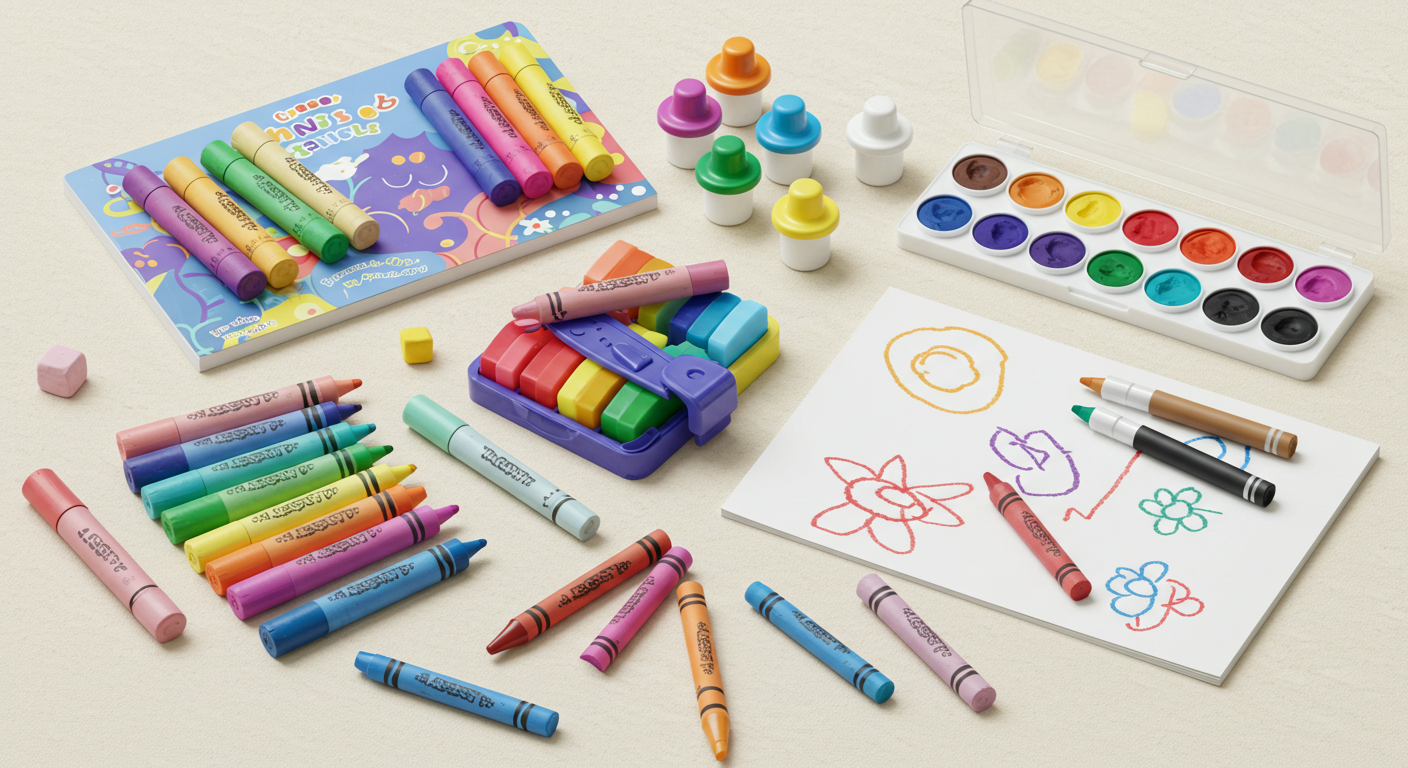
Crayons are often a child’s very first art tool, and for good reason! They’re generally non-toxic, affordable, and easy for small hands to grasp.
- Jumbo Crayons:
- Best for: Toddlers and preschoolers (ages 1-3). Their thicker size makes them easier for tiny hands with developing grips.
- Pros: Durable, less likely to break, vibrant colors.
- Cons: Less precise for detailed work.
- Top Brands: Crayola Jumbo Crayons, Melissa & Doug Jumbo Crayons.
- Standard Crayons:
- Best for: Preschoolers and early elementary (ages 3-7+).
- Pros: Wider range of colors, good balance of durability and detail.
- Cons: Can still break with pressure.
- Top Brands: Crayola Crayons (the original and still a favorite), RoseArt Crayons.
- Twistable Crayons:
- Best for: All ages.
- Pros: No sharpening needed, less mess, durable plastic casing prevents breakage.
- Cons: Can be more expensive than traditional crayons, less tactile feedback than traditional wax.
- Top Brands: Crayola Twistables, Faber-Castell Twistable Crayons.
Key Consideration: Always prioritize non-toxic certifications (look for ASTM D-4236). For very young children, choose larger, harder-to-swallow crayons.
2. Markers: Bold & Bright Fun
Markers offer intense color and smooth coverage, making them exciting for kids. Safety and washability are paramount here.
- Washable Markers:
- Best for: All ages, especially younger kids.
- Pros: Easily wash off skin, clothing, and most surfaces. Bold, vibrant colors.
- Cons: May bleed through thin paper.
- Top Brands: Crayola Washable Markers (Ultra-Clean, SuperTips), Melissa & Doug Washable Markers.
- Broad Tip Markers:
- Best for: Toddlers and preschoolers. Easy to hold and create large, expressive strokes.
- Pros: Great for large areas, easy grip.
- Cons: Not suitable for fine details.
- Fine Tip Markers:
- Best for: Older preschoolers and elementary schoolers (ages 4+).
- Pros: Better for detail work, drawing lines, and writing.
- Cons: Can still bleed if paper is too thin.
- Top Brands: Crayola SuperTips, Staedtler Fineliners (for older kids).
- Dot Markers (Dabbers):
- Best for: Toddlers and preschoolers.
- Pros: Large, easy-to-use felt tips perfect for developing hand-eye coordination without precise grip. Less mess.
- Cons: Limited to dot or broad stroke applications.
- Top Brands: Do A Dot Art! Markers, Crayola Dot Markers.
Key Consideration: Washability is crucial! Always check for “washable” on the packaging. Ventilated caps are also a good safety feature to prevent choking hazards.
3. Colored Pencils: Precision and Control
For kids ready for more detailed work and developing their pencil grip, colored pencils are an excellent next step.
- Triangular/Ergonomic Pencils:
- Best for: Preschoolers and early elementary (ages 3-6) who are learning proper pencil grip.
- Pros: Designed to encourage a comfortable and correct grip.
- Cons: Can be slightly more expensive.
- Top Brands: Faber-Castell Grip, Crayola Triangular Colored Pencils.
- Standard Colored Pencils:
- Best for: Elementary schoolers (ages 5+).
- Pros: Wide range of colors, good for fine details, layering, and blending (with practice).
- Cons: Requires sharpening, can break if dropped or pressed too hard.
- Top Brands: Crayola Colored Pencils, Prang, Staedtler.
- Twistable Colored Pencils:
- Best for: All ages.
- Pros: No sharpening, less mess, durable.
- Cons: Less precise tip than traditional sharpened pencils.
- Top Brands: Crayola Twistables Colored Pencils.
Key Consideration: Look for break-resistant leads. While most are non-toxic, confirm the ASTM D-4236 standard.
4. Paper & Coloring Books: The Canvas for Creativity
The right paper makes a big difference in how well the coloring tools perform.
- Thick Drawing Paper/Construction Paper:
- Best for: All ages, especially for markers or kids who press hard.
- Pros: Reduces bleed-through, more durable for erasing or layering. Can be used for free-form drawing.
- Cons: May be more expensive than standard printer paper.
- Recommended: Paper around 80-100 gsm (grams per square meter) or higher.
- Washable Coloring Books:
- Best for: Toddlers and young preschoolers. Features thick lines and simple images.
- Pros: Pages can often be wiped clean or used with water-activated pens.
- Cons: Limited in scope, not for traditional coloring.
- Jumbo Coloring Books:
- Best for: Toddlers and preschoolers. Large images are easy to fill in.
- Pros: Engaging, lots of space for big movements.
- Cons: Can be bulky.
- Themed Coloring Books:
- Best for: All ages, especially elementary schoolers.
- Pros: Engages specific interests (characters, animals, vehicles), provides structure.
- Cons: Can be thin paper, so check quality.
Key Consideration: For markers, always prefer single-sided coloring books or use a protective sheet behind the page to prevent bleed-through onto the next image.
5. Essential Accessories for Young Artists
- Kid-Safe Scissors: Blunt-tip scissors are a must for cutting practice.
- Pencil Sharpener: Choose one with a good grip and a container for shavings. Manual ones are great for developing fine motor skills.
- Art Smock/Old T-shirt: Protect clothing, especially with younger kids or non-washable mediums.
- Storage Solutions: Bins, caddies, or art boxes help keep supplies organized and accessible.
Safety First: Always Check Labels!
When choosing any art supplies for children, the most important consideration is safety.
- Non-Toxic: Look for the “AP” (Approved Product) seal from the Art & Creative Materials Institute (ACMI), which signifies that the product is certified non-toxic and safe for use.
- Age Recommendations: Pay attention to age grading on packaging. Smaller parts, choking hazards, or certain chemicals might make products unsuitable for very young children.
By selecting appropriate and high-quality coloring supplies, you’re not just providing entertainment; you’re investing in your child’s creative development, fine motor skills, and self-expression. Choose wisely, and watch their imaginations flourish!
Thank you for reading! We hope this guide helps you pick out the perfect coloring supplies for the young artists in your life.
Start coloring now!