
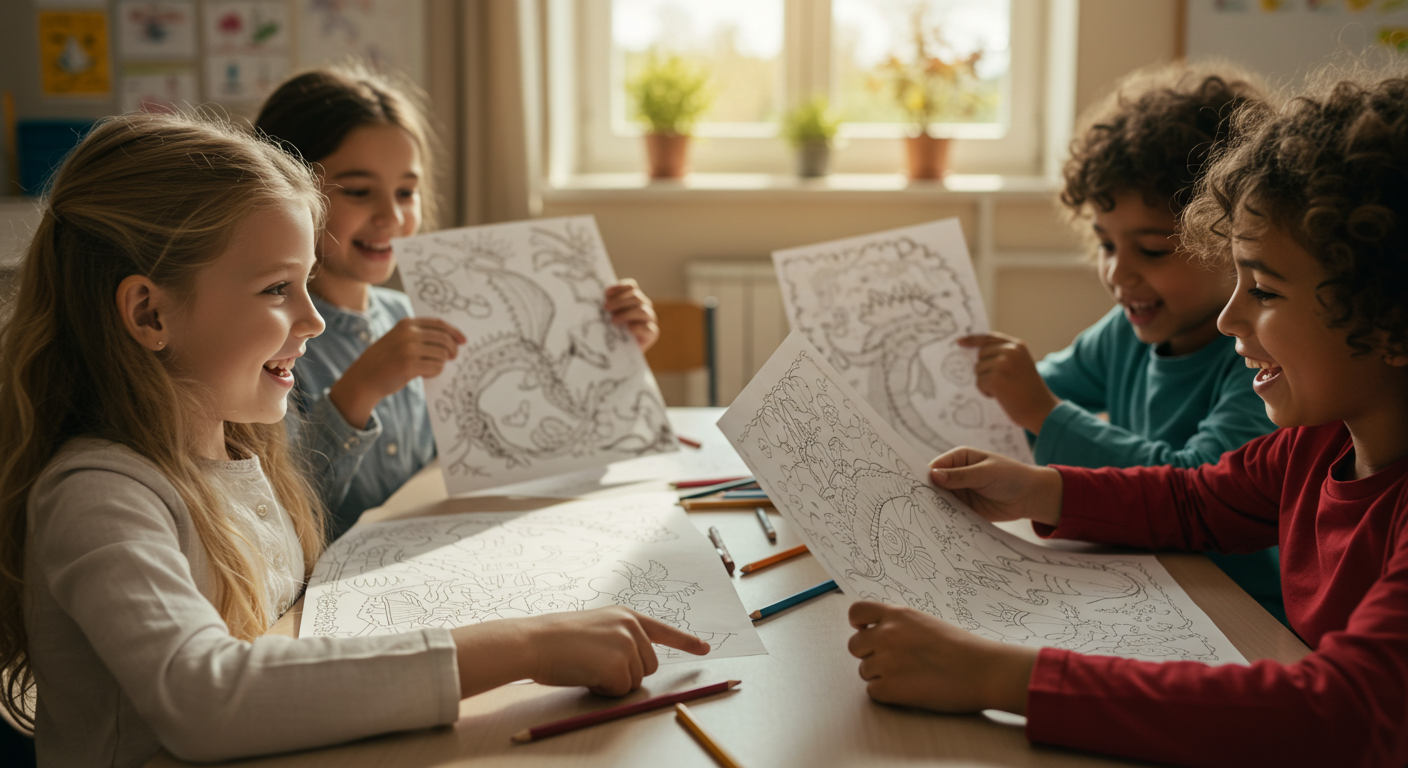
Concern 1: “Coloring stifles creativity.”
This is a frequently debated topic in art education circles. The concern stems from the idea that pre-drawn lines limit a child’s imagination and impulse for free expression. However, a balanced perspective reveals that coloring, when approached thoughtfully, can be a valuable tool in fostering creativity, not stifling it.
According to experts in child development and art education, the key lies in how coloring is presented and encouraged. If coloring is the only art activity offered, and children are rigidly instructed to stay within boundaries, then indeed, it might limit imaginative exploration. However, when integrated as one of many diverse art experiences, it can serve several positive functions:
- Building Foundational Skills: It helps children practice fine motor control, hand-eye coordination, and pencil grip—skills that are crucial for all forms of artistic expression and writing.
- Exploring Color and Composition: Within a structured outline, children can experiment with different color combinations, shading techniques, and even basic composition, learning about how colors interact.
- Developing Focus and Patience: For some children, the defined structure of a coloring page provides a comforting framework that allows them to focus and develop patience for a task.
- A Stepping Stone to Free Drawing: For children who might be intimidated by a blank page, coloring provides a low-pressure entry point into art, building confidence before they venture into free-form drawing.
- Encouraging Open-Ended Approaches: Parents can encourage creativity by:
- Suggesting unique color choices (e.g., a purple dog, a green sun).
- Inviting them to add their own details to the background or foreground.
- Using different mediums (markers, pastels) on the same page.
- Cutting out their colored work and incorporating it into a collage or diorama.
Many educators suggest a balanced approach, offering both structured activities like coloring and open-ended art supplies (blank paper, diverse materials) to nurture all aspects of a child’s artistic development.
Concern 2: “My child doesn’t stay in the lines.”
This is an extremely common observation, especially with younger children, and it’s perfectly normal and developmentally appropriate. Parents should be reassured that “staying in the lines” is a complex skill that develops over time, as fine motor control and visual perception mature.
According to occupational therapists and child development specialists, such as those at Pathways.org and The Inspired Treehouse, the ability to consistently color within lines typically develops between the ages of 4 and 6 years old. Before this, children are in various stages of developing their fine motor precision:
- Scribbling Stage (18 months – 3 years): Children use large, whole-arm movements. Their focus is on the act of making marks, not on precision. Lines are meaningless at this stage.
- Emerging Controlled Marks (2-3 years): They begin to gain more control, making intentional vertical or horizontal lines, but fine motor control for small areas is still very undeveloped.
- Pre-Schematic Stage (3-4 years): Children start to draw basic shapes (circles, crosses) and may attempt to fill larger outlines, but often overshoot the boundaries. Their visual motor integration is still maturing.
- Fine Motor Skill Checklist (1-3 Years) – Pathways.org
- How to Teach a Child to Color – The Inspired Treehouse
How to support your child and manage expectations:
- Focus on the Process, Not the Product: Praise their effort, their color choices, and their enjoyment. Avoid correcting them or insisting they “stay in the lines.” This can lead to frustration and diminish their love for art.
- Provide Appropriate Tools: Use large, chunky crayons or markers and big sheets of paper, especially for younger children. These allow for broader movements.
- Encourage Different Grips: As they get older, their grip will naturally evolve. Don’t force a “correct” pencil grip too early; it will develop as their hand muscles strengthen.
- Offer Variety: Provide various art activities, including finger painting, playdough, and drawing on large easels, all of which build hand strength and coordination.
- Be Patient: Fine motor skills develop gradually. Celebrate every mark they make, whether it’s inside or outside the lines, and trust that precision will come with time and practice.
By understanding these common concerns and adopting a supportive approach, parents can ensure that coloring remains a joyful and beneficial activity for their child’s holistic development.
Start coloring now!